Mango is one of the popular fruits in the world due to its attractive color, delicious taste and excellent nutritional properties. Known for its sweet fragrance and flavor, the mango has delighted the senses for more than 4000 years. A celebrated fruit, mango, now produced in most of the tropical parts of the globe.
Showing posts with label processing. Show all posts

Wednesday, January 12, 2022

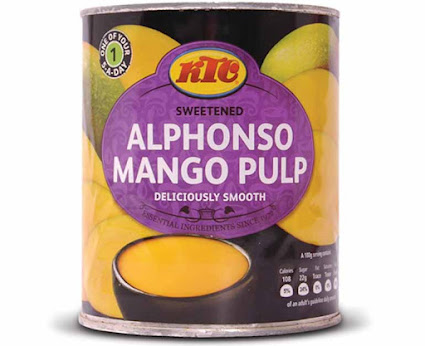
Mango pulp

Mango is basically divided into three major parts such as exocarp (11-18%), mesocarp (60-73%) and endocarp (14-22%). The fruit is a laterally compressed, fleshy drupe, containing mesocarp (mango pulp). Its edible part is pulpy, firm to tender, and has its own characteristic flavor. The mango pulp is protected by a peel which, under normal temperature and pressure conditions, ensures perfect food safety.

Pulp extraction has been found to be one of the most efficient methods of fruit preservation. Mango pulp can be consumed freshly, blended with other juice to form fruit jams or it can be evaporated to form concentrates. These products have a great potential in beverage and other food industries for export and foreign exchange earnings.

Fully matured mangoes are harvested, quickly transported to the fruit processing plant, inspected and washed. Fully ripened mango fruits are then washed, blanched, pulped, deseeded, centrifuged, homogenized, concentrated when required, thermally processed and aseptically filled maintaining sterility.

The production of pulp requires extraction of juice with the crushing of membranes of the fruit which contains juice and then processing it to make it a thick paste.

The preparation process includes cutting, destoning, refining and packing. In case of aseptic product, the pulp is sterilized and packed in aseptic bags. The refined pulp is also packed in cans, hermetically sealed and retorted. Frozen pulp is pasteurized and deep-frozen in plate freezers.

Mango pulp preservation and storage is important for the industry for converting it into various products based on market demand.

Mango pulp retains most of the nutrients of fruit and thus preferred in various food and beverage products. Studies have reported that mango pulp and peel contain high dietary fiber (DF). DF plays an important role in many physiological processes in the prevention of illnesses such as constipation, hypertension, liver cirrhosis, diabetes, cancer, and others.

Pulp is used for the production of jams, marmalades, jellys, sweets, drinks and fillings of baked goods.
Mango pulp
Saturday, March 14, 2015

Processing of mango flakes

Dried products are available in the form of leathers, bars, pieces, powders and flakes. Techniques such as sun drying, tunnel dehydration, drum drying, spray drying, vacuum drying, osmotic dehydration and freeze drying have been established.

Mango flakes are produced using drum-drying technology. The production of mango drum dried flakes involves blending mango pulp with small amounts of wheat flour and sugar at certain pH.

The homogenized mixture is dried using an atmosphere double drum dryer at 50-60 psi. Drums are adjustable to maintain the desired thickness of the material deposited on the surfaces of the drums.

As the drums rotate, water is evaporated from the thin layer of material on the surface and a scraping blade is positioned to remove the dried material from the drum surface. A drum dryer with 0.254 mm spacing, a product residence time of 25 s, and a steam pressure of 4.2 kg/cm2 was considered a satisfactory condition for mango puree flake production.

Important processing variables include drum speed, steam pressure drum temperature, initial moisture content and drum clearance.

The drum drying products are extremely hydroscopic and the use of in-package desiccant is recommended during storage.
Processing of mango flakes 

Tuesday, February 17, 2015

Mango concentrate

The purpose of concentration of mango is to remove at least 50% of the initial water content. Mango pulp was concentrated by four methods:
*Freeze concentration
*Evaporation under vacuum
*Centrifugal separation of the juice into pulp and serum, the serum being concentrated alone using freeze concentration
*Evaporation

If concentrate is to be prepared from puree, treatment with enzymes to break down pectin and cellulose, followed by centrifugation or fine-mesh filtration, is necessary.

The concentrated is stable without the addition of chemicals as long as it is kept frozen.
Flowchart: Processing of mango concentrate
It serves as base for further industrial processing and formulations as mango juice, nectars and ice cream and drink mixes.

The optimum concentration of mango pulp is 45 - 48° Brix, and the quality of ready-to-serve beverages prepared from the concentrated is comparable to that from fresh pulp.

Enzymatic liquefaction has been employed to improve the quality of higher °Brix concentrates. Mango concentrates are utilizes in the preparations of juice and energy drinks.
Mango concentrate

Monday, January 26, 2015

Mango squash

Mango juice can be made into mango nectar or squash and processed by any of the following methods:
*Spin cooker
*Flash pasteurization
*Pasteurization and aseptic packing in plastic-lined cartons

Juicy varieties of mango are preferred for making mango squash.  A mango squash contains a high percentage of sugar (60-65%) and should contain at least 25% fruit pulp.

Mango nectar and squash are similar in composition, except for the presence of a preservative: 0.1% sodium benzoate or 350 ppm SO2 in squash.

Mango squash formulation consists of blending 68% Brix syrup with mango puree, citric acid and potassium metabisulfite in various proportions depending on local state, government standards of identity, pH control, and fruit composition of the variety used.

The squash quality is evaluated on the basis of the following characteristics, pH, titrable acidity, soluble solids, ascorbic acid, specific gravity.
Mango squash

Monday, December 29, 2014

Mango vinegar

Mango is most usually eaten raw. However, production volumes of this fruit are high and large quantities are often waste. Peels and stones of mango wastes have been made into vinegar. The peel and stones account for nearly 20-30% of the fruit and constitute the waste.

Vinegar is produced form mango pulp by alcoholic fermentation as a first step and acetification as a second step.

The pulp is usually diluted in water and filtered through a filter cloth to obtain the juice.

Prior to alcoholic fermentation, sugar can be added to this juice to obtain sufficient ethanol concentration.

In the process, the strain of   Saccharomyces cerevisiae was used to initiate fermentation.

The next step, oxidation of the alcohol to acetic acid is carried by acetic acid bacteria Acetobacter aceti.

The final mango vinegar has an acidity of around 5.3% acetic acid, light yellow color pleasant flavor and was acceptable organoleptically. The appearance and taste is similar to that of white wine vinegar.
Mango vinegar

Sunday, December 14, 2014

Processing of mango powder with spray drying

Mango powder, mainly used as a beverage base or flavoring is prepared by drying mango puree. Spray drying is one of the most commonly used commercial process for drying fruit purees.

Immediately prior to spray drying, 5% liquid glucose and tri-calcium phosphate (0.5% as an anti-caking agent) are incorporated into the puree.

The mixture is then heated at 50 °C for 30 minutes, homogenized at 2,800 rpm, pumped to the atomizer (at 2,800 rpm) and spray dried at 165 °C inlet temperatures.

The dried powder falls into the bottom of the chamber.

If the proper feed formulation and process parameters are applied, spray-drying is an efficient and hygienic method for producing cheap but high quality mango fruit powder.

Mango powder can be stored up to 6 months in polyester or metalized polyester pouches at 27 – 32 °C.
Processing of mango powder with spray drying

Popular Posts

FOOD SCIENCE AND HUMAN NUTRITION

FOOD PACKAGING TECHNOLOGY

COMPUTER SYSTEM