Mango is one of the popular fruits in the world due to its attractive color, delicious taste and excellent nutritional properties. Known for its sweet fragrance and flavor, the mango has delighted the senses for more than 4000 years. A celebrated fruit, mango, now produced in most of the tropical parts of the globe.
Showing posts with label disease. Show all posts

Monday, May 11, 2026

Mango Scab: A Hidden Threat to Mango Production

Mango scab is a fungal disease that affects mango trees in many tropical and subtropical regions around the world. The disease is caused by the fungus Elsinoë mangiferae, also known in its asexual stage as Denticularia mangiferae. Although it is less widely known than anthracnose, mango scab remains an important problem for growers because it damages leaves, fruits, and young stems, reducing both fruit quality and market value.

The disease is especially common in areas with warm, humid, and rainy weather. Moisture plays a major role in the spread of the fungus because fungal spores germinate and infect plant tissues more easily under wet conditions. Young leaves and developing fruits are particularly vulnerable. Unlike anthracnose fungi, which can survive on dead plant material, Elsinoë mangiferae is an obligate biotrophic pathogen. This means it survives only on living plant tissue, making active mango trees essential for the fungus to continue its life cycle.

The symptoms of mango scab vary depending on the age of the infected tissue and the severity of the infection. On leaves, the disease first appears as tiny dark or black spots. As these lesions enlarge, the leaves may become distorted, curled, or crinkled. Corky growths can also develop on the underside of leaves, and severe infections may cause premature leaf drop. Defoliation weakens the tree and reduces its ability to produce healthy fruit.

Fruit symptoms are often the most economically damaging. Infected mangoes develop rough, corky, and scab-like lesions on their skin. These blemishes may crack as the fruit grows, producing scar tissue that reduces the fruit’s appearance and commercial value. In severe cases, infected fruits may fall from the tree before ripening. Even when the flesh inside remains edible, consumers are less likely to purchase blemished fruit, leading to financial losses for growers and exporters.

Mango scab can also affect young stems and twigs. Grey or brown lesions may appear on tender shoots, eventually becoming corky and enlarged. Heavy infections can slow shoot growth and reduce tree vigor over time.

Managing mango scab requires an integrated approach. Farmers often improve air circulation within orchards through pruning, which helps leaves and fruit dry more quickly after rain. Removing infected plant material can also reduce sources of fungal spores. Fungicide sprays, especially copper-based products, are commonly used during flowering and early fruit development when trees are most susceptible. In addition, planting resistant or less susceptible mango varieties can help limit disease outbreaks.

Although mango scab is sometimes overshadowed by other mango diseases, it remains a serious challenge in humid growing regions. Effective disease monitoring and proper orchard management are essential to maintaining healthy trees and producing high-quality mangoes for local and international markets.
Mango Scab: A Hidden Threat to Mango Production

Thursday, January 29, 2026

Root Rot and Damping-Off Diseases in Mango Seedlings and Young Trees

Root rot and damping-off are common and destructive fungal diseases that affect mango seedlings and young trees, particularly during early growth stages. These diseases are responsible for significant losses in nurseries and young orchards, as they can kill plants rapidly if not managed properly. Both conditions are closely linked to soil-borne fungi that thrive in warm, humid, and poorly drained environments—conditions often found in tropical and subtropical mango-growing regions.

Damping-off primarily affects germinating seeds and young seedlings. Infected seedlings may appear healthy at first, but soon collapse and die suddenly. A key sign is rotting or thinning of the stem at soil level, which causes the plant to topple over. Root rot, on the other hand, affects slightly older seedlings and young trees. In this case, the roots become soft, mushy, and discolored, turning dark brown or black as decay progresses. Above ground, infected plants often show yellowing leaves, wilting, stunted growth, and premature leaf drop. These symptoms tend to worsen during prolonged rainy periods or in consistently waterlogged soils.

The most common pathogens involved include Pythium and Rhizoctonia, which are especially problematic in nurseries and seedbeds where moisture levels are high. Fusarium species and Lasiodiplodia are more frequently associated with root and stem rot in older seedlings and young trees and may also cause dieback of branches. These fungi persist in soil and plant debris, making prevention a critical part of disease management.

Effective control relies heavily on good cultural practices. Using well-draining soil or potting media, planting in raised beds, and avoiding excessive irrigation are essential steps. Proper spacing and good airflow around plants help reduce humidity at the soil surface, limiting fungal growth. Sanitation is equally important: pots, trays, and tools should be sterilized—commonly with a 10% bleach solution—and only fresh, disease-free potting mix should be used.

Chemical and biological controls can provide additional protection. Copper-based fungicides and certain systemic fungicides are commonly applied as soil drenches to suppress pathogens. In nursery settings, soil solarization—using clear plastic to heat the soil—can significantly reduce fungal populations. When combined with careful watering and hygiene, these measures offer effective, sustainable control of root rot and damping-off in mango production.
Root Rot and Damping-Off Diseases in Mango Seedlings and Young Trees

Friday, August 30, 2024

Understanding and Managing Mango Scab

Mango scab, caused by the fungus Elsinoë mangiferae, is a significant disease that poses a serious threat to mango trees. This fungal infection primarily targets young fruits, flowers, and foliage, leading to the formation of scaly lesions that can drastically reduce the quality of the fruit. The disease is most commonly identified by the appearance of small, black lesions on young mango fruits and brown to grey lesions on leaves. These lesions often cause the leaves to become crinkled and deformed, hampering the tree's overall growth.

In severe cases, the infection can lead to the premature dropping of fruits, while those that remain on the tree often develop unsightly scar tissues, making them unmarketable. The economic impact of mango scab is significant, particularly in regions where mango cultivation is a major agricultural activity. The fungus thrives in wet, humid conditions, particularly in swampy, low-lying orchards. It spreads through rain splash or wind, making it difficult to control, especially during the rainy season.

Managing mango scab requires a combination of preventive and chemical strategies. Preventive measures include pruning infected stems and removing dead tissues to reduce the levels of inoculum, thereby lowering the risk of disease spread. Chemical control, particularly with copper-based fungicides, has proven effective. These fungicides should be applied from the flower bud emergence stage to the flowering stage at two to three-week intervals for optimal results.

Differentiating mango scab from anthracnose, another common fungal disease, is essential for proper management. While both diseases cause lesions, the raised structures in scab lesions are a distinguishing feature. Effective management of mango scab is crucial for maintaining the health and productivity of mango trees, ensuring high-quality fruit production, and safeguarding the livelihoods of those dependent on mango cultivation.
Understanding and Managing Mango Scab

Friday, August 23, 2024

Managing Mango Root Rot and Damping Off: Prevention and Treatment Strategies

Mango root rot and damping off are serious diseases that can devastate mango trees, especially in areas with poor drainage and high humidity. These diseases are particularly problematic in tropical and subtropical regions where mango cultivation is prevalent.

Root rot is caused primarily by soil-borne fungi such as Phytophthora and Fusarium species. These pathogens thrive in waterlogged soils, leading to the decay of roots, which turn black and mushy. The disease is often characterized by yellowing leaves, stunted growth, and wilting. If left untreated, root rot can lead to the complete death of the mango tree. The fungi attack the roots, impeding the tree's ability to absorb water and nutrients, which is critical for the tree's growth and fruit production.

Damping off, on the other hand, primarily affects young seedlings and is caused by fungi like Pythium, Rhizoctonia, and Fusarium. This disease is characterized by the sudden collapse of seedlings after they emerge from the soil. The base of the seedlings appears water-soaked and mushy, making it difficult for the plant to absorb nutrients and water. This rapid deterioration often leads to the death of the seedlings, severely impacting mango cultivation.

Effective management of these diseases involves a combination of cultural and chemical strategies. For root rot, improving soil drainage is essential. Planting mango trees on raised beds or mounds and avoiding overwatering are key practices. Fungicides can be used to treat infected trees, though natural remedies like cinnamon and hydrogen peroxide are also gaining popularity for their environmental safety and effectiveness.

To prevent damping off, using sterilized pots and soil, ensuring good air circulation, and avoiding overwatering are critical. Close monitoring of seedlings is necessary, and any infected plants should be removed immediately to prevent the disease from spreading.

By adopting these management strategies, farmers can significantly reduce the incidence of root rot and damping off, thereby improving the health and productivity of mango trees.
Managing Mango Root Rot and Damping Off: Prevention and Treatment Strategies


Monday, April 29, 2024

Understanding Mango Gummosis Disease

Gummosis, also known as gumming syndrome, is a significant concern affecting commercially important fruit trees like mango crops and Prunus spp. This condition involves the exudation of gum in response to various injuries, leading to substantial losses in fruit production and sometimes tree mortality.

The causes of gummosis are diverse, including environmental stress, mechanical wounds, and infestations by pests or pathogens. For instance, Cytospora canker is a fungal disease commonly associated with gummosis in mango trees. Infected trees exhibit symptoms such as yellowing or wilting of new shoots and leaves. Sunken lesions develop on the bark, from which amber-colored, gummy sap oozes. As the disease progresses, curly orange fungal threads may emerge from the bark, and leaves often brown and drop prematurely.

The impact of gummosis on mango orchards can be devastating, with yield losses ranging from 30% to 100% in severe cases. Infected trees exhibit abundant gum secretion from branches, stems, and the main trunk, alongside vascular discoloration. In the worst instances, entire mango trees may succumb to the disease.

Efforts to manage mango gummosis include maintaining orchard hygiene, promptly pruning and disposing of infected plant material, and applying appropriate fungicides. Research into resistant cultivars and sustainable farming practices continues to be vital in mitigating the economic and ecological impacts of this widespread fruit tree disease.
Understanding Mango Gummosis Disease

Sunday, March 24, 2024

Understanding Mango Malformation Disease: A Threat to Mango Production

Mango malformation disease, a fungal affliction, poses a significant challenge to mango cultivation worldwide. The disease, caused by Fusarium fungi, manifests as aberrant flower and leaf development, leading to compromised plant vigor and diminished fruit yield.

This malady spares no age group of mango trees, affecting both mature specimens and nursery seedlings alike. Mature trees exhibit distorted leaves, shoots, and flowers, while young nursery plants suffer from severe stunting due to malformed leaf growth.

The primary culprit behind mango malformation disease is Fusarium, with Fusarium mangiferae identified as a particularly menacing strain. Its discovery in Australia in 2007 raised alarms, prompting eradication efforts in isolated incidents like the successful containment achieved in Queensland in 2009.

Symptoms of mango malformation disease include the distinctive compact development of shoots and flowers. Interestingly, affected plants may simultaneously display both normal and abnormal growth, adding complexity to diagnosis.

This fungal infestation targets both inflorescences and vegetative portions of the mango tree. While the trees themselves typically survive the onslaught, the disease disrupts canopy development during the vegetative phase and dramatically reduces fruit yield during the floral phase. Consequently, mango growers face significant economic losses as malformed inflorescences fail to bear fruit, impacting the entire production cycle.

In conclusion, mango malformation disease poses a formidable threat to mango cultivation globally. Understanding its symptoms, causes, and impact is crucial for effective management strategies to safeguard mango orchards and ensure sustainable production in the face of this major mango disease.
Understanding Mango Malformation Disease: A Threat to Mango Production

Sunday, December 25, 2022

Mango sooty mould

Sooty mould results from interactions among sap-feeding insects and nonparasitic fungi. Sooty mould disease is noticed as a black velvety superficial coat of fungi on the entire surface of leaves and twigs.

Mango sooty mould is one of the species of fungi that grow on honeydew results from interactions among sap-feeding insects such as soft scale (wax, green and cottony cushion scales), mealybugs, aphids, whiteflies and treehoppers and non-parasitic fungi. Disease is severe in old and dense orchards where light intensity is low. Trees exposed to eastern side have fewer incidences while the trees in center of the orchard have more incidences.

Among the symptoms of mango sooty mould:
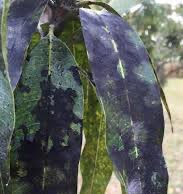
*Black velvety covering on the leaf surface. As parasitic insects use the sugary honeydew as a food source, the sooty mould fungi begin to grow on the sugars left by insects on the foliage, turning the leaf surface to black.
*The fungus grows on the leaf surface on the sugary substances secreted by jassids, aphids and scale insects.
*The entire leaf surface may be covered or initially the symptoms may be present only as flakes on the leaf.
*Black encrustations are formed on the surfaces of different parts of the plant. The photosynthetic ability of the plant is highly reduced.
*Under dry spell such affected leaves curl and shrivel. The severity of infection depends on the honey dew secretions by the scale insects
Mango sooty mould

Wednesday, August 31, 2022

Mango red rust

Red rust is an algal disease and the causal organism responsible is Cephaleuros virescens, and has been observed in mango growing areas. The algal attack causes reduction in photosynthetic activity and defoliation of leaves thereby lowering vitality of the host plant.

The disease can be easily recognized by the rusty- red spots mainly on leaves and sometimes on petioles and bark of young twigs and is epiphytic in nature.

Cephaleuros species are green algae under kingdom Archaeplastida, Phylum Chlorophyta, Class Ulvophyceae, Order Trentepohliales, Family Trentepohliaceae which parasites several host plants causing the disease, which occurs in all tropical and subtropical regions of the world.

The disease is characterized by initial green coloured patches and velvety in texture, as and when disease advances the organism turns red rusty spots on the leaves and young twig.

Spots are slightly raised and coalesce to form larger ones. While usually harmless, severe causes of these leaf spots can lead to defoliation, tissue necrosis, damage of stems and loss of marketable fruit.

Mango red rust symptoms are:
*Algae attacks foliage and young twigs
*On young stems, the spots cause cracks in the bark and these can lead to dieback
*Rusty spots appear on leaves, initially as circular, slightly elevated, coalesce to form irregular spots
*The spot may merge
*The spores mature fall off and leave cream to white valvet texture on the surface of the leaves
Mango red rust

Tuesday, February 1, 2022

Phoma blight of mango

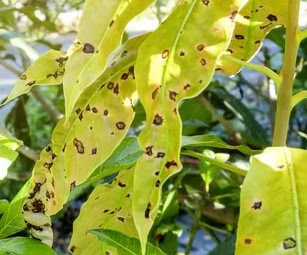
The symptoms of a phoma blight infection are visible only on older leaves. When the fungus first attacks the leaves, symptoms show as small, discolored yellowish and brownish spots. Affected leaves display angular, yellow to brown irregular lesions scattered over the entire lamina.

As the fungal spores continue to develop, the spotting grows in size and area, with the coloration changing to a rusty brown and the centers can take on a grayish color. As the lesions enlarge their colour changes from brown to cinnamon.

Phoma blight spreads rapidly, and any health part of a plant that is touching infected soil is at risk of succumbing.

The symptoms are cause by the fungus Peyronellaea glomerata, formally known as phoma glomerata, thereby the common name of the disease. Phoma glomerata was originally described as a Coniothyrium by Corda. Woolenweber and Hochapfel transferred it to the genus Phoma and added the description for dictyospores. The species of sect. Peyronellaea are characterized by the production of conspicuous multicellular chlamydospores.

Infections by this fungus are most common in wet and cool conditions. It survives in soil and in the old plant debris that is under your plantings.
Phoma blight of mango

Friday, December 3, 2021

What are the symptoms of mango malformation disease?

Mango malformation disease (MMD) caused by Fusarium mangiferae severely affects the crop and is widely distributed in almost all mango-growing regions worldwide. Additional Fusarium species have also been reported to cause MMD.

It has become one of the most widely distributed threatening problems in mango growing orchards in India as well as in many other mango growing countries of the world.

Abnormal, compact development of shoots and flowers are common signs of mango malformation disease. There are two categories of symptoms. vegetative and floral malformation.

Vegetative malformation is most serious on seedlings and young trees in nurseries, especially where seedlings are grown beneath the canopies of affected trees, but it also occurs on mature trees.

Both normal growth and mango malformation disease–affected growth may be present on a plant at the same time. This includes shorter internodes, dwarfed malformed leaves and an overall tightly bunched appearance of the shoot, while inflorescence malformation includes short, thick and branched axes of the inflorescence.

The symptoms of floral malformation are characterized by deformation of panicles. suppression of apical dominance, shortening of primary and secondary axis. giving the panicle a characteristic clustered appearance, thickened rachis of panicles, and greatly enlarged flowers with large disc and the preponderance of staminate flowers bearing scantly pollen grains.

Floral malformation is most important economically since affected inflorescences usually do not set fruit.
What are the symptoms of mango malformation disease?

Saturday, November 6, 2021

Mango disease: Dieback disease

Mango decline or dieback is a serious disease of mango. Dieback of mango is very destructive disease caused by Lasiodiplodia theobromae.

L. theobromae, however, it has been reported as the causal agent in destroying mango orchards within days or a few weeks of infection in India, USA, Pakistan, Brazil, Oman, and Korea. L. theobromae is a soil-borne wound pathogen that can affect all parts of the mango tree at all ages.

The L. theobromae occurs in about 500 plant species. The fungus is typical of tropical and subtropical regions and is easily disseminated by wind, insects, and pruning tools. At favorable conditions, the pathogen infects the plant branch, causing dieback and/or canker diseases, sometimes reaching the trunk, and even causing plant death.

The fungus, L. theobromae, often invades twigs and branches from their tips of mango trees causing them to dry and the plant to wilt. Symptoms at early stages of the disease included general wilting appearance of mango trees, and dieback of twigs.

In advanced stages, the disease symptoms were also characterized by the curling and drying of leaves, leading to complete defoliation of the tree and discolouration of vascular regions of the stems and branches.
Mango disease: Dieback disease

Thursday, September 23, 2021

Mango anthracnose

Worldwide, mango anthracnose is the most important and destructive disease of mango. Anthracnose is a major pre‐ and post‐harvest disease on mango, causing direct yield loss in the field and packing plant, and quality and marketing issues thereafter. It is the most important disease of mango in humid production areas.

Colletotrichum gloeosporioides is responsible for many diseases, also referred to as “anthracnose,” on many tropical fruits including banana, avocado, papaya, coffee, passion fruit, and others. On mango, anthracnose symptoms occur on leaves, twigs, petioles, flower clusters (panicles), and fruits.

Characteristic symptoms appear as oval or irregular vinaceous brown to deep brown spots of various sizes scattered all over the leaf surface, later forming elongated brown necrotic areas measuring 20-25 mm in diameter. The lesions start as small, angular, brown to black spots that can enlarge to form extensive dead areas.

The appearance of anthracnose spot is rounded brown to black lesions with an indefinite border on the fruit surface. The lesion size extends to 2 cm is common. Different sized lesions are coalesced together to cover the extensive areas of the fruit, which develops from the basal toward the distal end of the fruit. Lesions are generally confined to the peel.

Under moist conditions, the blackened areas are covered with minute pinkish reproductive bodies of the fungus.

Ripe fruits affected by anthracnose develop sunken, prominent, dark brown to black decay spots before or after picking. Fruits may drop from trees prematurely.
Mango anthracnose

Wednesday, August 4, 2021

Powdery mildew of mango

Powdery mildew of mango caused by Oidium mangiferae Berthet is a widespread and most important disease of mango. It is most severe in the drier areas of the state when rain occurs during the flowering season. Worldwide, it is found in most mango growing areas.

Mango powdery mildew is a sporadic but very severe disease of mango leaves, panicles, and young fruits; up to 90 percent crop loss can occur due to its effect on fruit set and development.

Powdery mildew is primarily a disease of flowers, young shoots, and young fruits. The disease may cause foliar, inflorescence or fruit infection. The characteristic symptom of the powdery mildew disease is the white superficial powdery growth of the fungus on these parts having millions of conidia which are borne in chains on conidiophores, which later turns in to grey color.

Mildew pathogen attacks flowers resulting in their shedding. The sepals are relatively more susceptible than the petals. From a distance, the infected parts of the mango tree have a grayish haze resulting from the masses of conidia and fungal growth on the infected surface.

Young leaves are mostly infected on the underside, especially along the veins, but more susceptible varieties are also infected on the upper surface. Older leaves are more resistant to infection. Grayish, necrotic lesions or large, irregularly shaped spots may form on leaves.
Powdery mildew of mango

Sunday, March 14, 2021

Bacterial canker disease of mangoes

Canker disease of mango caused by Xanthomonas campestris pv. Mangiferaeindicae. The bacterial canker disease of mango is also known as bacterial spot, leaf spot, black spot, mango blight and bacterial black spot.

Bacterial canker is a serious mango disease that may result in a 50% to 80% reduction in fruit production.

The bacterial canker disease is rapidly spreading during rainy days. The disease is spread through the infected planting parts. When the fruits are in bunches the bacterial disease is spread through the contact with each other.

The disease is found on leaves, stem, branches and fruits. This disease is mainly seen in the form of irregular necrotic patches (cankerous patches) with brown color. Fruit symptoms appear as small water-soaked spots on lenticels. These spots later become star-shaped, erumpent, and exude an infectious gum.

Severe fruit infections will cause premature fruit drop. Less severe infections reduce fruit quality and allow entry of other pathogens.
Bacterial canker disease of mangoes

Monday, December 21, 2015

Black spot of mangoes

Black spot is the most important disease of mangoes in regions where this fruit is grown commercially.

Anthracnose or black spot caused by the fungus colletotrichum gloeosporiodes is usually appears in the fruit only as it ripens.

It develops in all tender parts of the plant and is especially severe on the flower and flower stems. The spots first appear as a very small brown area that enlarge rapidly and become black.

Often the entire fruit surface is covered by the coalesing of the spots. The affecting areas usually crack and sink slightly.

Mangoes are also susceptible to black spot disease, the agent of which is Alternaria alternate.

Control may rely on benomyl, prochloraz or a variety of other fungicides. Hot water dips with or without fungicides for 2-5 minutes have been quite affective in control of anthracnose and stem end rots in mangoes.
Black spot of mangoes

Sunday, March 21, 2010

Black Spot Disease of Mango

Black Spot Disease of Mango
Although the symptoms on leaves and fruits are by far the most commonly observed symptoms, Xanthomonas sp. mangiferaeindicae may cause lesions on all the aerial parts of the mango tree.

The first visual signs on the laves are small angular oily looking spots measuring 1-3 mm and delimited by the veins, They then turn black and appear in relief on both sides of the leaves.

Most often young lesions have an oily looking margin and are surrounded by a chlorotic halo. Old foliar lesions are brown and then become ash grey.

X. sp. mangiferaeindicae does not cause tree mortality but reduces the yield of susceptible cultivars sometimes drastically, due to very heavy defoliation.

Disease incidence is acute on these cultivars in all regions with concomitant hot and humid periods.

The disease was first observed on herbarium specimens collected from India in 1880.
Black Spot Disease of Mango

Sunday, March 14, 2010

Mango and the disease

Mango and the disease
The low productivity in India production of mango is due to the associated disease problem.

Mango is affected by a number of disease at all stages of its development, right from the plants in the nursery to the fruits in storage or transit.

Hardly any plant organ is immune and almost every part viz. stem, branch, twig, root, leaf, petiole, flower and fruit are affect by various pathogens, yet there are few diseases which are of great economic importance.

These diseases manifest themselves as several kinds of rot, die back, mildew, necrosis, scab, blotch, stem bleeding, wilt, spots canker, sooty moldy and malformation.

Leaf spot diseases cause great loss and hamper the efforts made to increase the yield of mango tree.

They impoverish the leaves, diminished the phyto-synthetic efficiency and upset normal physiological activity of the host.

Some of theses disease take heavy tool of trees and have become limiting factor in mango cultivation in some regions.

Bloom blight or Blossom blight in some years causes a complete failure of the crop.

Other disease like bacterial canker, black tip, powder mildew, sooty mould and doe back in India are the sources of great loss to the orchardists.
Mango and the disease

Thursday, April 10, 2008

Mango Malformation Disease (MMD)

Mango Malformation Disease (MMD)
Mango Malformation Disease is a fungal disease of mangoes caused by several species of Fusarium, some yet to be described. Mango is only known host of the disease.

The disease spreads on a tree very slowly, but if left unchecked, can severely reduce yields. The main method of spreading MMD to new areas is through infected vegetative planting material. There is no evidence that the disease can spread on fruit or the seeds, or that it affects human health. It usually associated with the bud mite, Aceria mangiferae but the mites have been shown to spread the disease within a tree and not between trees.

Mango Malformation Disease has been found on most mango growing countries of the world. Australia was thought to be free of the disease but in November 2007, symptoms of MMD were detected on treed in a finalized research trial containing about 2,000 trees at Coastal Plains Research Farm at Middle Point.
Mango Malformation Disease (MMD)

Popular Posts

FOOD SCIENCE AND HUMAN NUTRITION

FOOD PACKAGING TECHNOLOGY

COMPUTER SYSTEM